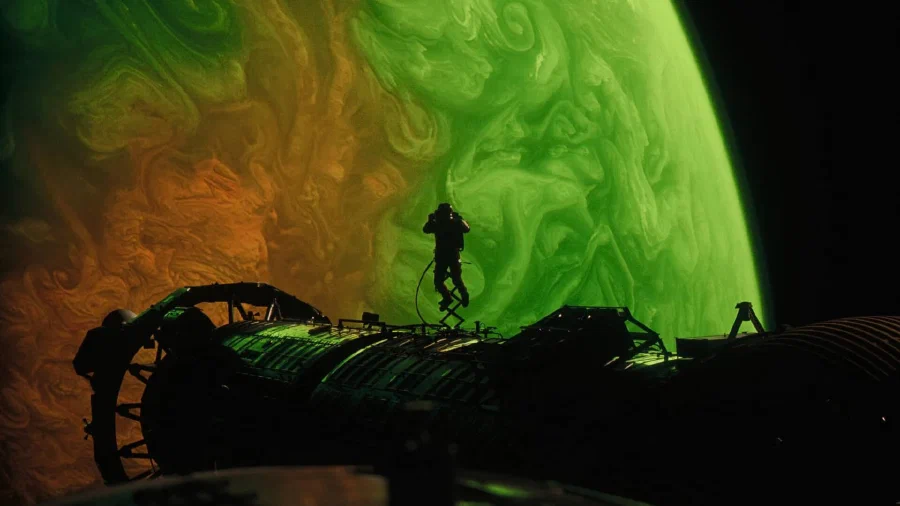
“Project Hail Mary” has finally arrived on streaming platforms, making it perfect for anyone who didn’t get the chance to see it at the cinema. It’s one of those films that’s worth taking the time to watch, because behind its sci-fi adventure facade lies a human story and a unique way of portraying science.
The film is directed by Phil Lord and Christopher Miller, a duo who have proven over the years that they can breathe life into even the riskiest projects. Here, they work closely with Ryan Gosling, who does not merely act but actively contributes to shaping the film’s tone. The film is based on the novel of the same name by Andy Weir, the author of The Martian.
The plot follows Ryland Grace, a scientist who is introduced in a direct and straightforward manner. Grace has been ostracised from the academic world because his ideas are considered too eccentric and because his character has not always made collaboration easy. Despite this, the US government decides to offer him a second chance, involving him in a secret programme with a very simple objective: the sun is being devoured by alien organisms, and humanity needs a solution before it is too late.
Of course, nothing goes to plan. Grace wakes up alone on a spaceship, with no memory and her mission companions dead as a result of a malfunction. The first part of the film really plays on this sense of disorientation, as Grace doesn’t know why he’s there, doesn’t know what he’s supposed to do, and doesn’t even know who he was before losing his memories. Whilst he is trying to piece together his story, the first contact is made with another spacecraft, this time an alien one. It’s a moment that completely changes the course of the film, but from this point on I won’t go into any more detail, partly because the film hints at the general direction quite quickly, but the way it gets there is part of its charm.
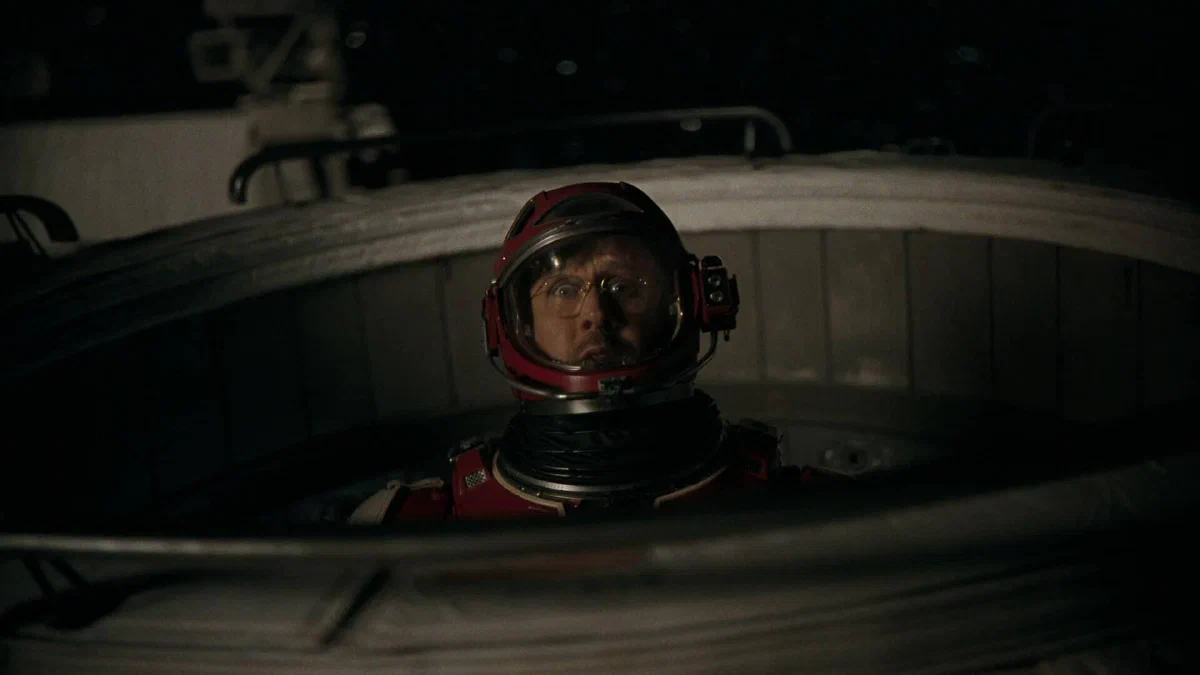
When it comes to the overall assessment, the film is particularly striking for the way it portrays the scientific method. I’m not referring to futuristic technology or technical jargon, but to the passion that shines through in the smallest of gestures. There is a scene in which Grace rejoices after hours of work over a seemingly insignificant discovery. This moment, though simple and amusing, encapsulates the dedication that every researcher puts into their work. The film also reminds us that science is, first and foremost, about collaboration: a process that transcends cultural and national boundaries when there is a common goal. It is a message that comes across clearly and without rhetoric.
From a technical standpoint, the film does exactly what it sets out to do: tell a gripping story, without setting out to revolutionise the genre. Some of the scientific choices may seem a bit far-fetched, but anyone who has read the book will know that many of them are explained in greater detail there. The actors perform well, and Ryan Gosling proves once again that he is a performer capable of shouldering much of the emotional weight of the narrative on his own.
The cinematography and framing often bring to mind 2001: A Space Odyssey, an obvious yet never tiresome homage that adds a touch of elegance to the film’s presentation. It is a reference that fans will spot immediately and which helps to give the film a broader scope, almost contemplative at times.
The ending, perhaps, could have been handled slightly differently. It isn’t inconsistent, in fact, it’s clear what the film was aiming for and it achieves it, but it leaves a feeling that’s somewhat at odds with the rest of the film. It doesn’t spoil the overall experience, it simply diverges from the general tone in a way that might annoy viewers.
That said, “Project Hail Mary” is a film that’s definitely worth catching up on. It manages to be gripping, emotionally powerful and capable of portraying science with a warmth that’s not often seen in genre cinema. If you haven’t seen it yet, then now’s the perfect time to do so.