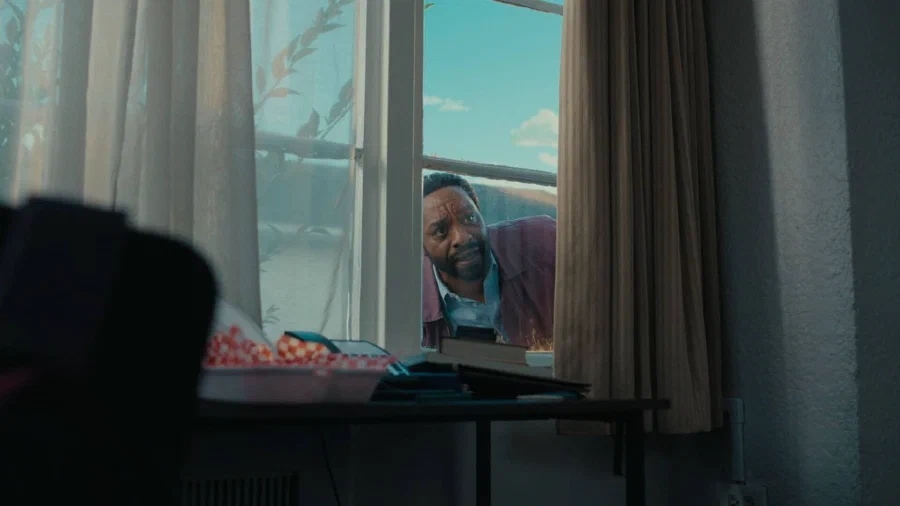
Kane Parsons’s film debut, Backrooms, represents one of those rare moments when a grassroots phenomenon born in the depths of the internet and nurtured by a global community manages to make the leap to the big screen without completely losing its identity. The film, produced by A24 on a budget of ten million dollars, brings to the big screen the liminal and unsettling imagery that made the Backrooms creepypasta famous, and does so through the eyes of a very young filmmaker who, paradoxically, is already an integral part of the myth he is recounting. Parsons, in fact, is not merely a director called upon to interpret a trend, as he is one of its most influential creators, thanks to the series of short films published on YouTube that have earned him a global following.
It is precisely this distinctive quality that is one of the film’s most fascinating aspects. On the one hand, Parsons brings with him a creative freshness and an ability to manipulate space, honed through his experience with 3D modelling and short-form storytelling. On the other hand, his inexperience in making the transition to feature-length filmmaking is quite evident, particularly in his handling of pacing and the construction of the narrative structure. This is because the film seems to oscillate between the ambition to be a complete work and the realisation that it is merely the first instalment of a larger project, perhaps a franchise.
The first part of the film is characterised by a slow-paced introduction, which presents the main characters without really delving into them. Clark, played by Chiwetel Ejiofor, is a deliberately ambiguous figure, in that he is neither a traditional hero nor an anti-hero, but a man who experiences the world through a personal lens that may evoke empathy or repulsion, depending on the viewer. Parsons chooses not to steer the audience towards a single, definitive judgement, allowing Clark’s behaviour to speak for itself – often in contradictory ways. Mary, the psychologist played by Renate Reinsve, is, by contrast, a character built upon a murky past that is merely hinted at, as if the film were seeking to suggest a potential future development without actually committing to exploring it. Whilst this choice may prove frustrating on the one hand, on the other it helps to create a sense of mystery consistent with the very setting of the Backrooms.
The pace changes abruptly in the second half of the film, as the narrative accelerates towards the climax and then straight into the conclusion. Many viewers have perceived this structure as unbalanced, with the first half feeling too long and the second too rushed. Whilst I find this a understandable criticism, I also believe it is not entirely justified, as Parsons gives me the impression that he is seeking to build a world in which to tell new stories, rather than focusing on creating a self-contained work.
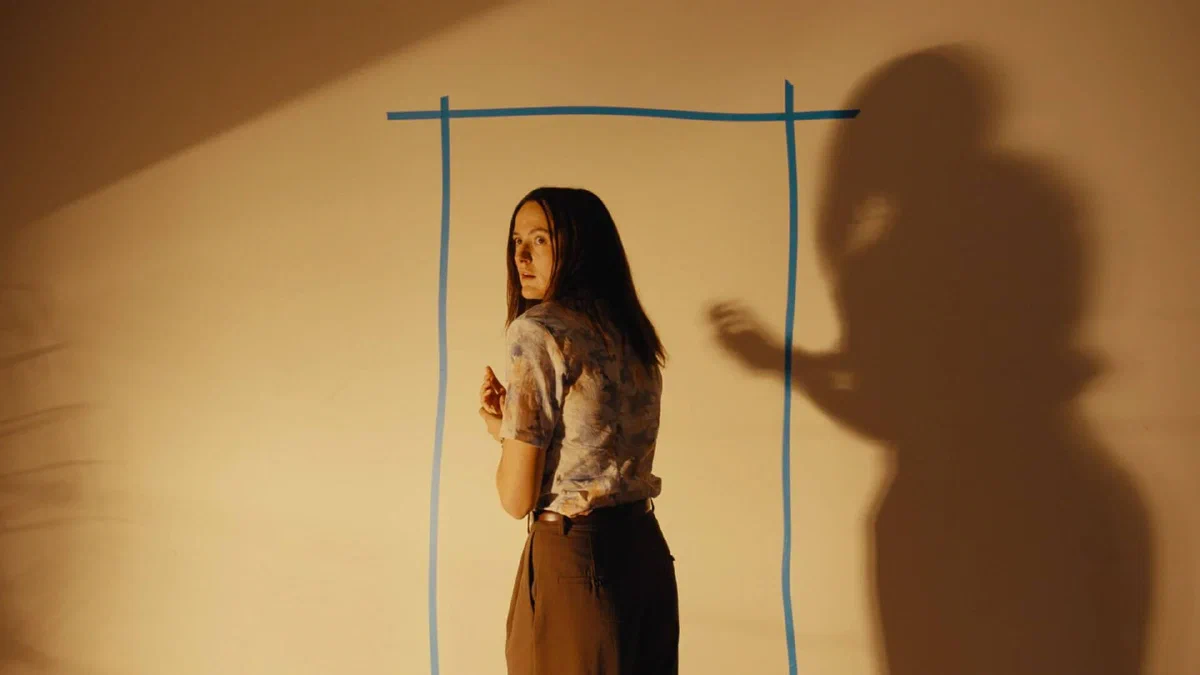
Ultimately, Backrooms seems to function more as a prologue that is an introduction to a potentially infinite narrative universe rather than as a self-contained film. The subplots left unresolved, particularly those linked to the research company, seem to confirm this intention. Fans of his YouTube videos might be disappointed by the lack of answers, but it is clear that the film does not seek to conclude, but rather to open up new possibilities.
One of the most impressive aspects of the production is the physical construction of the environments, with their nearly 30,000 feet of sets built to recreate the liminal spaces that made the creepypasta famous. Thanks to this approach, Parsons demonstrates remarkable visual maturity, particularly in the sequences where Clark wanders with the camera through endless corridors, identical rooms and impossible geometries. It is precisely in these moments that the film seems to reach its climax, giving the viewer the sensation of being trapped in a place that ought not to exist.
Also interesting is the decision not to follow the levels structure typical of Backrooms lore. Here, a more organic approach is adopted, based on the idea that the further one moves away from the entrance, the more chaotic, unstable and almost sentient the space becomes. The Backrooms are not a dungeon to be explored, but an organism that absorbs, corrupts and forgets whatever enters it. This more conceptual and less playful interpretation allows the film to avoid the trap of categorisation and to focus instead on the atmosphere and the fear of the unknown.
The supporting characters, whilst not particularly well-developed, fulfil a specific function: that of acting as narrative catalysts, tools for setting events in motion and heightening the tension. They do not leave a significant impression on the viewer, but they help to build the atmosphere of suspense that pervades the first part of the film. It is a functional, if not particularly memorable, use of these characters, which once again confirms the transitional nature of this first instalment.
Ultimately, Backrooms is a film that thrives on contrasts, appearing ambitious yet incomplete, and visually enchanting yet narratively underdeveloped. Yet it is precisely this imperfect nature that makes it so fascinating. It is a work that seems to say: “This is only the beginning”. Parsons has not made the definitive film about the Backrooms, but he has opened a door. And, as the original creepypasta teaches us, once a door to the Backrooms has been opened, there is no guarantee that it can be closed again.