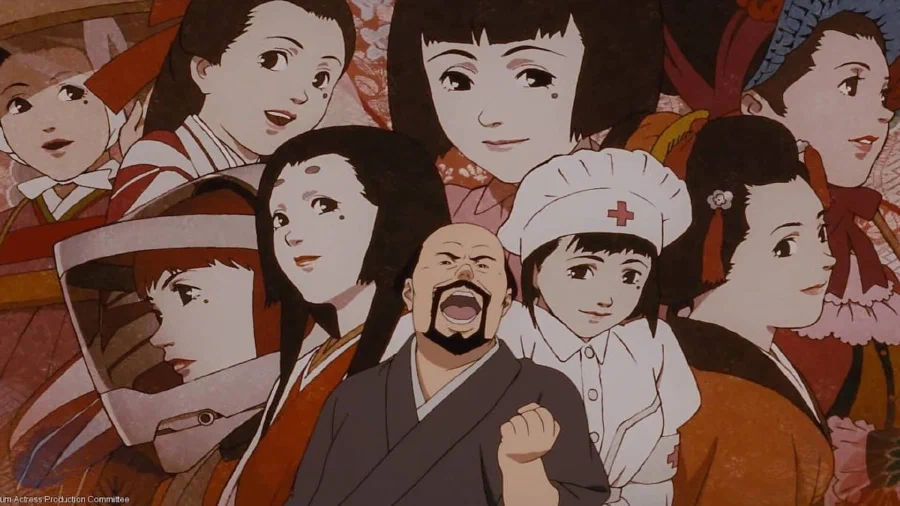
Millennium Actress is probably the least talked-about film by the late Satoshi Kon, but also one of his most profound and complex. Unlike his more famous works such as Paprika and Perfect Blue, this film demands greater attention from the viewer in order to grasp the plot and the underlying themes that run through it.
Kon eschews immediate spectacle and builds the narrative slowly, choosing to begin at the end and retrace the protagonist’s entire life. At first, one may feel a sense of disorientation, to the point of feeling overwhelmed by the events, but once you get a feel for the film’s rhythm, the story explodes with all its emotional power.
The story centres on Chiyoko Fujiwara, a legendary actress who has left the world of cinema to retire to a secluded mansion. A television director, Genya Tachibana, and his assistant decide to interview her to make a documentary about her career and the mystery surrounding her retirement.
This is precisely where Kon’s magic comes into play, as the two documentary filmmakers do not merely record Fujiwara’s memories, but literally find themselves inside the films in which he starred, becoming an integral part of his memories and his performances.
The central theme of the work is the constant pursuit of an unattainable love, always close at hand yet inevitably elusive, which accompanies the protagonist throughout her life.
This apparent monotony sets this film apart from the director’s other works, which focus more on spectacle and character development. Here, Kon does not simply wish to tell a story, but to convey the weight of an entire life, the way in which dreams can shape a person’s existence, and how memories blend together uncontrollably until they become indistinguishable from cinematic fiction.
For a young audience, it may be difficult to fully grasp the film’s intent, as it requires a certain emotional maturity and an awareness of the passing of time, but it is precisely for this reason that it is a film that may be better understood in the future. The fact that the film does not seek to entertain with jokes or plot twists, nor does it force the viewer to pay close attention to details, allows the audience to be completely drawn into the protagonist’s life, and if one manages to identify with her, the film strikes a critical blow to the heart.
The meaning of the work revolves around the idea of living with a purpose – something that not everyone manages to find – and the challenges involved in pursuing it despite setbacks and the lack of any guaranteed success. At the same time, the viewer finds themselves reflecting on how a life without victories can simply seem empty and a failure.
The narrative structure is not divided into linear sections, but closely resembles a typical stream of memories, just like human memory, which does not follow a precise order, but tends to focus on what we consider significant. Once you understand this mechanism, the narrative becomes practically clear.
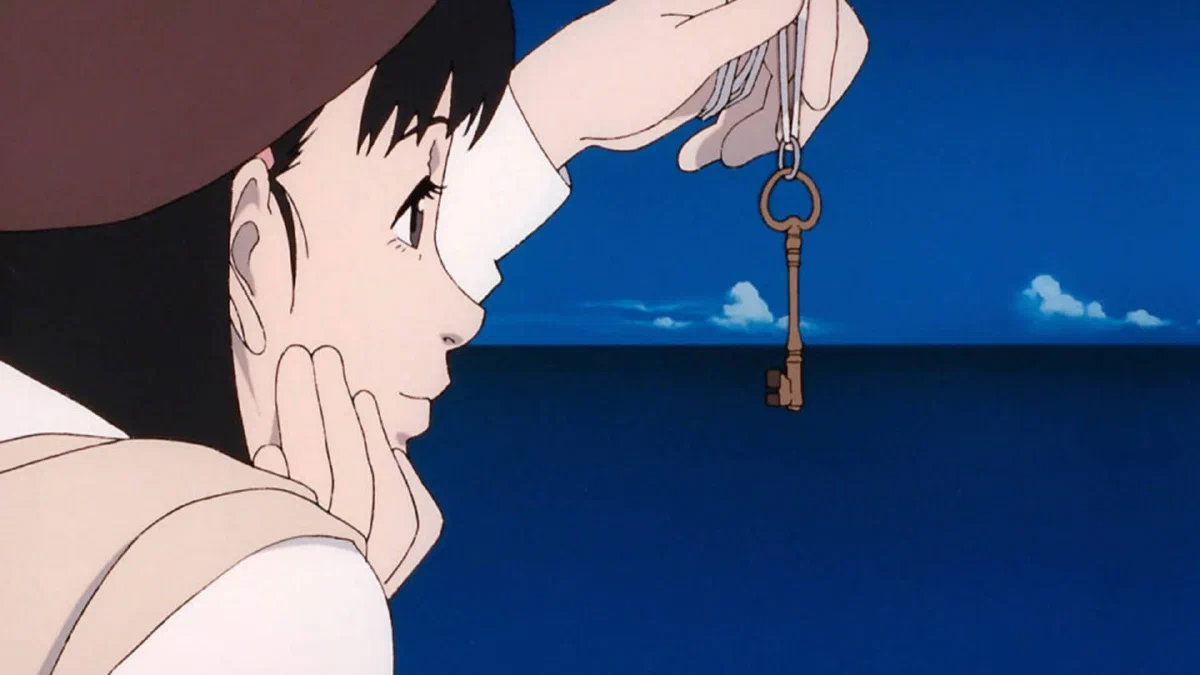
Chiyoko’s story is shaped by her encounter, at a young age, with a revolutionary on the run, with whom she exchanged a promise to meet again. The only thing she has left of him is a key, which, according to the man, would open “the most important thing in the world”. Driven by the desire to find him again, Chiyoko decides to become an actress, hoping that fame will allow him to recognise her, as well as giving her the chance to travel all over Japan in the hope of tracking him down.
The film shows how a single moment can change a whole life and how the protagonist never gave up on her dream, despite the difficulties of adulthood. This emotional tension is also evident in her early experiences as an actress, especially when she realises that acting does not mean pretending, but finding within herself the emotions to convey through the character she is playing.
Millennium Actress is, therefore, a film that explores memories, desires and identity; in essence, a journey through a life told with a delicacy and depth that only a master like Satoshi Kon could have handled with such grace.