There are films that don’t shout, don’t impose themselves, don’t try to please everyone. Princess Arete is one of them. Directed by Sunao Katabuchi and produced by Studio 4°C in 2001, it is a work that has chosen silence, slowness and depth. And for this reason, perhaps, it has never received the appreciation it deserves. But today, thanks to its free (albeit temporary) viewing on YouTube, we have a rare opportunity to rediscover it. And we should do so.
The story is simple, but not trivial. Arete is a young princess locked in a tower, promised in marriage to whoever can win her heart by bringing her a gift found through travels and adventures to the known ends of the world. But she does not dream of marriage, she dreams of freedom, knowledge and the desire to set off to explore the world. When a wizard kidnaps her and curses her, no one comes to her aid. No knight, no saviour, only the hope that she herself will have to discover and build. After all, her enterprising ideas make her dangerous in the eyes of the royal family, so why bother saving someone who only brings trouble? Arete will therefore have to save herself, facing her fears and the reality that surrounds her.
The film is inspired by Diana Coles’ The Clever Princess, a feminist fairy tale that had a huge impact in Japan. ‘A princess who waits is out of fashion!’ was the book’s slogan. And Katabuchi, who had lived in the shadow of the anime industry for years, took this phrase to heart. After collaborations with Miyazaki and Takahata, after numerous failed projects and postponed dreams, Princess Arete became his personal redemption. It was a film he was able to make according to his own vision, despite a small budget and spartan production. ‘The film exists […] and can be shown. If anyone wants to see it, it’s there,’ he said in an interview.
But her creation is not just a story of female emancipation. It is a profound reflection on the meaning of life, on the ability to react, to change and to be able to follow one’s own path in the world. The protagonist breaks the three mirrors of existence: immobility (when she realises she wants to succeed at something), resignation (when she gives meaning to her existence), and fear of death (when she decides to use the time available to her constructively). The film suggests that it is much more difficult to face one’s illusions than to live a comfortable, carefree existence. It succeeds without resorting to stereotypical antagonists. In fact, both Arete and her magical captor follow parallel paths, face the same difficulties, and find divergent answers that, in the end, seem to lead to the same place.
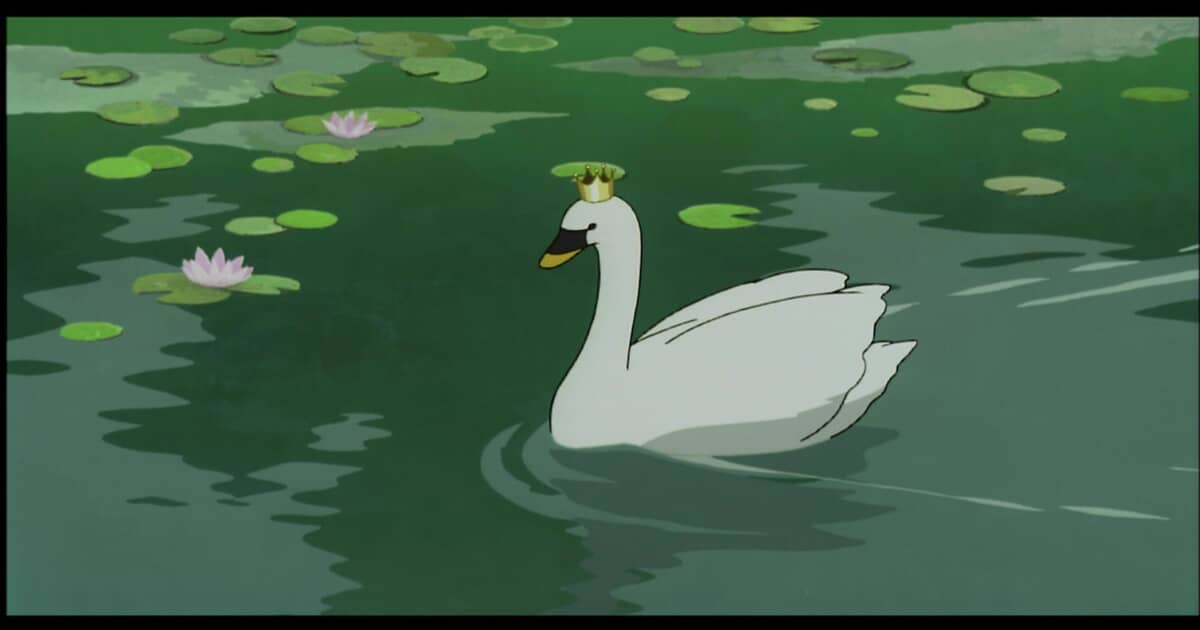
Aesthetically, Princess Arete is a work of rare and unique beauty. Attention to environmental detail, respect for nature, and appreciation of everyday life are the most obvious influences that the director absorbed during his work at Studio Ghibli. This is reflected in the backgrounds, the studied movements of the characters, and the moments of quiet life that permeate the film. The farmers, merchants, and passers-by contribute to making this fantasy world real, managing to convey vitality in their everyday movements. It is precisely in these movements that we understand that life has meaning, as Arete says, even if we are unable to understand what that meaning is.
Production took about two years and was Studio 4°C’s first to be completely digital. The colours are balanced with painterly sensitivity, avoiding the typical excesses caused by digitally scanning drawings. Katabuchi constructed the film with artisanal dedication, studying medieval castles and even going so far as to build a miniature one out of cardboard. All this to bring to life a world that was real, tangible and lived-in.
Yet, when the film was released, to say that it went almost unnoticed would be an understatement. Like his previous project (Lassie), Princess Arete disappeared from theatres without leaving a trace. But its value certainly cannot be measured in terms of commercial success. Rather, it lies in the fact that it exists, that it endures and that it speaks to those who are willing to listen.
Princess Arete is not a film you watch: it is a film you experience. It is slow, contemplative, and therefore precious. It is a fairy tale that invites us to take a moment to pause, reflect, and believe in the possibility of change. It is the dream of an artist who fought for years to tell a different story: his story. And today, finally, we can hear it.