‘Cinema is the most direct way to compete with God.’
Without meaning to, Fellini managed to sum up what this film is all about in a single sentence. The dream of an aspiring director turns into a passionate ode to the seventh art, told with the heart of someone who loves it deeply and the mind of someone who knows how to question it. Between surreal comedy and a structure that manages to alternate between comedy and drama, the viewer finds themselves immersed in a meta-cinematic film that shows the process of making a film, starting from dreams and ending with the birth of the work.
The story takes place in Nyallywood, a colourful parody of the famous film mecca, where Joelle Davidovich Pomponette, aka Pompo, reigns supreme as a producer. Specialising mainly in B-movies and blessed with an infallible instinct for entertainment, Pompo looks like a young girl but commands an authority that is never questioned. Her assistant, Gene, is a shy and observant young man with an unspoken dream of directing a film. When he discovers a screenplay written by Pompo herself, he falls in love with it to the point of asking her to turn it into a film. Pompo agrees… but on one condition: Gene himself will direct it.
Alongside him comes Natalie, a simple country girl who has just arrived in the big city with dreams of becoming an actress. Despite all the difficulties she has faced, from working various jobs to pay the rent to being rejected at audition after audition, she finally gets the chance of a lifetime when Pompo decides to hire her as the lead in the film directed by Gene.
With this cast of idealistic, disillusioned, passionate or confused characters, the film lightly and humanely sketches the dreams and inner struggles of those who live to tell stories. Gene, in particular, undergoes a transformation from silent spectator to conscious director, while even secondary characters, such as the members of the various crews, find in cinema the opportunity to reinvent themselves, redeem their past and question their life choices.
On a more technical note, the film is an explosion of warmth and vitality. The animation, almost devoid of digital frills, relies on soft lines and a vibrant colour palette, capable of evoking intimate emotions while paying homage to the most iconic cinematic imagery. The decision to limit the use of computer graphics conveys a sense of craftsmanship that perfectly complements the narrative. The cinematography becomes an active element of the story: it deceives, suggests, enchants, blurring reality and fiction with a lightness that seems magical. The film is not afraid to openly pay homage to the great masters of the past — spectacularly calling “Nuovo Cinema Paradiso” a masterpiece — nor to embrace the language of B-movies with the same respect and affection.
Rather than recounting the making of a film, this film celebrates its collective and artisanal essence. Cinema emerges as an act of love, composed of personal dreams and concrete collaboration between individuals with different but equally crucial roles. From the director to the sound engineer, from the costume designer to the lighting technician, every element of the set contributes to the construction of a vision, and the film does not merely show this: it honours it.
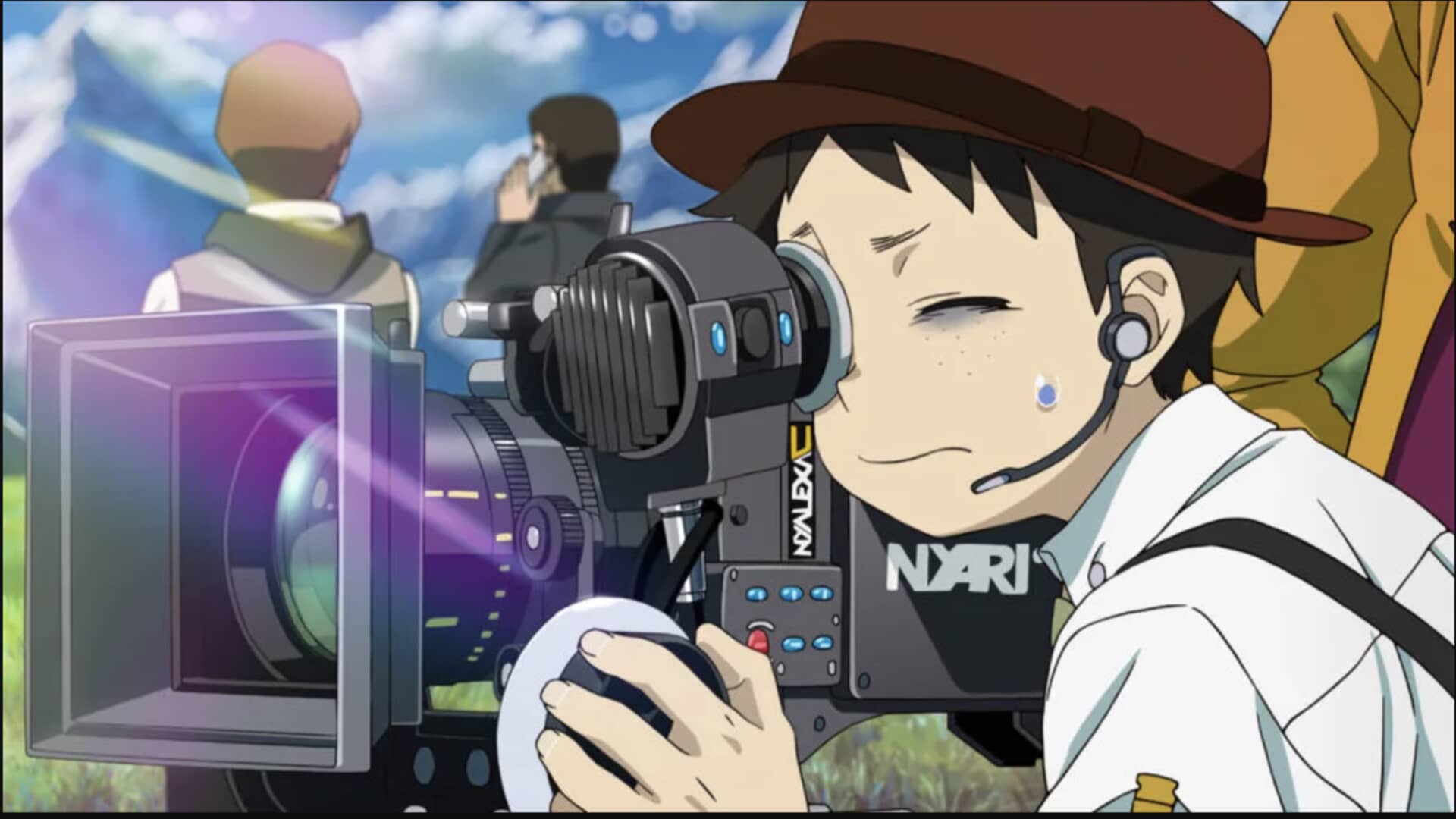
Editing, often relegated to invisible steps, is portrayed here as an existential moment, a continuous choice between what remains and what is cut away, almost as if to symbolise life itself.
In this creative universe, talent is not enough if it is not accompanied by confidence, listening and failure. The film emphasises a simple but powerful concept: to achieve something authentic, you must first believe in yourself.
Cinema is seen as an opportunity for rebirth and transformation, a language that allows us to say things that cannot be said in any other way. And perhaps this is where its greatness lies: in making the invisible visible, in giving shape to an emotion, an idea, a collective dream that can only become real when we come together.
Perhaps the only moment when the film seems to falter is in the finale, where the tone takes on a more romanticised tone, too perfect to remain consistent with the delicacy and balance built up to that point. However, even this excess never seems forced: rather, it seems like a final act of love towards the audience and towards that collective dream that the film has celebrated from the beginning. It is an ending that is moving, even if it risks simplification, but which remains consistent with the idealistic and affectionate gaze with which the entire story has been told.
Ultimately, this film is not only a declaration of love for cinema, but a deeply human experience, capable of speaking to anyone who has ever dreamed of creating, storytelling, or leaving a mark. It is a heartfelt tribute to every part of the creative process, but also an encouragement to believe in one’s own visions, even when they seem impossible to achieve. For those who love cinema – or simply the desire to express themselves – this film is a little gem: not just to watch, but to experience.